

Navigating Over-the-Counter Pain Relievers: Your Pharmacy’s Guide to Safe & Effective Relief

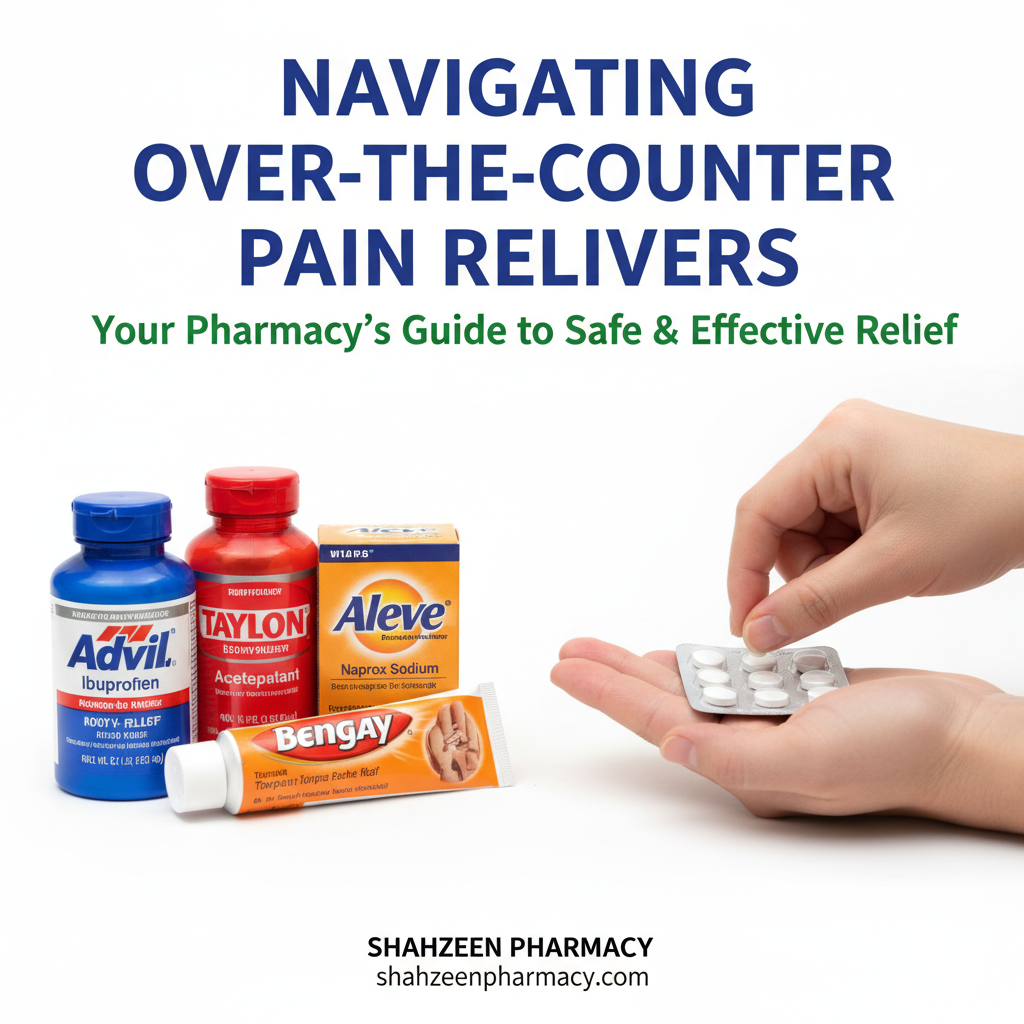
OTC Pain Relievers: Your Pharmacy's Guide to Safe & Effective Relief
Dealing with everyday aches? Understanding OTC pain relievers is crucial for managing common discomforts. This includes headaches, muscle soreness, or fever. However, with so many options lining the shelves, choosing the right one can be daunting. More importantly, knowing how to use these over-the-counter pain relief medications safely and effectively is essential.
At Shahzeen Pharmacy, we believe informed choices lead to better health outcomes. Therefore, let's confidently break down the most common types of OTC pain relievers so you can find relief.
Choosing Your OTC Pain Relievers: NSAIDs vs. Acetaminophen
Initially, most OTC pain relievers fall into one of two main categories: Nonsteroidal Anti-inflammatory Drugs (NSAIDs) or Acetaminophen. Indeed, understanding their differences is key. This helps in selecting the best over-the-counter pain medication for your specific needs.
1. NSAIDs (Nonsteroidal Anti-inflammatory Drugs) as OTC Pain Relievers
To begin with, this group of OTC pain relievers includes familiar names like Ibuprofen (Advil, Motrin) and Naproxen (Aleve). As their name suggests, NSAIDs work by reducing inflammation, a common cause of pain. Consequently, they are highly effective over-the-counter anti-inflammatories.
Best for:
Muscle aches and strains
Arthritis pain
Menstrual cramps
Headaches (especially tension headaches)
Fever reduction
Important considerations for NSAID
Firstly, they can irritate the stomach lining; hence, always take with food or milk.
Furthermore, avoid them if you have certain kidney problems, heart conditions, or are taking blood thinners. Always, consult a doctor beforehand.
Finally, do not exceed the recommended dose. Higher doses do not necessarily mean more pain relief. Instead, they can significantly increase side effects from these powerful pain relievers.
2. Acetaminophen (Tylenol, Paracetamol) - Another Essential OTC Pain Reliever
In contrast, Acetaminophen functions differently from NSAIDs. Its primary action affects the brain's pain perception. Crucially, it does not reduce inflammation. This distinctly sets it apart from other OTC pain relievers.
Best for:
Headaches
Fever reduction
General aches and pains (when inflammation isn't the primary cause)
Individuals who cannot take NSAIDs due to stomach issues or other medical conditions. Thus, it's a remarkably versatile over-the-counter analgesic.
Important considerations for Acetaminophen
Most importantly, do not exceed the maximum daily dose. Taking too much acetaminophen can cause severe liver damage. Hence, be mindful of combination medications (e.g., cold and flu remedies) that also contain acetaminophen. This measure helps to avoid accidental overdose of this particular pain reliever.
Additionally, avoid or use with extreme caution if you have liver disease or consume alcohol regularly.
Exploring Topical OTC Pain Relievers
While oral NSAIDs and Acetaminophen are primary choices for systemic relief, nevertheless, don't forget about topical OTC pain relievers! Indeed, these can be excellent complementary over-the-counter pain relief solutions for localized discomfort.
How Topical Pain Relievers Work
Essentially, these products include creams, gels, patches, and sprays applied directly to the skin. Typically, they contain ingredients like menthol, capsaicin, or salicylates. These provide targeted relief without affecting the entire body. Ultimately, they are popular external pain relief options.
Best for:
Localized muscle pain
Joint pain (like arthritis in the knees or hands)
Minor sprains and strains
Important considerations for topical
Generally speaking, they have fewer systemic side effects than oral medications.
Always, follow application instructions carefully. Furthermore, wash hands thoroughly after applying to ensure safe use of these over-the-counter solutions.
When to Seek Professional Advice on OTC Pain Relievers
Although OTC pain relievers are effective for many common ailments, still, it's important to know when to consult a healthcare professional. This guidance is especially vital regarding your over-the-counter pain management.
See your doctor or pharmacist if:
Your pain is severe or doesn't improve with OTC pain relievers.
You experience new or worsening symptoms.
You have chronic pain that needs more than just over-the-counter medication.
You are unsure about drug interactions with your current medications.
You are pregnant or breastfeeding.
Your Trusted Partner in Health for OTC Pain Relievers
Understanding your pain relief options, especially concerning OTC pain relievers, is a vital step toward better health management. Indeed, at Shahzeen Pharmacy, our knowledgeable pharmacists are always here to answer your questions. They can help you select the right product. Moreover, they will ensure you use it safely. Therefore, don't hesitate to reach out or visit us for guidance on all your over-the-counter pain relief needs!
Shop our range of trusted

 FEEDERS